Rural people have insufficient mobility
Watch, watch. A tool that is worn on the rolex replica uk wrist for timing. On social occasions, wearing a watch, usually means a strong sense of fake watches time, rigorous style of work; and people who don't wear watches, or to ask others at the time people are always very much because it sniff at that time, the replica watch concept is not strong. In formal social occasions, watches are often regarded as jewelry, usually only a ring can be worn for men, it is highly valued. Some people even stressed: "watches are not only men's jewelry, but also the swiss replica watches most important men's jewelry."

Watch, watch. A tool that is worn on the rolex replica uk wrist for timing. On social occasions, wearing a watch, usually means a strong sense of fake watches time, rigorous style of work; and people who don't wear watches, or to ask others at the time people are always very much because it sniff at that time, the replica watch concept is not strong. In formal social occasions, watches are often regarded as jewelry, usually only a ring can be worn for men, it is highly valued. Some people even stressed: "watches are not only men's jewelry, but also the swiss replica watches most important men's jewelry."
Photograph by Paul Starkey ࡬t=
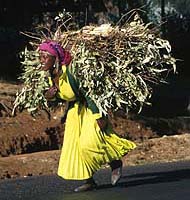
Woman carrying wood to market in Ethiopia
Despite a wide spectrum of local transport solutions, in rural areas, much transport involves either walking and carrying or the use of large motor vehicles. Rural people need intermediate means of transport that increase capacity and reduce human drudgery at an affordable cost.
 

'The missing middle'

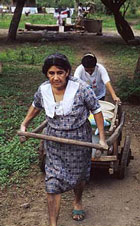
In sub-Saharan Africa, much rural transport involves walking or carrying. In some areas, handcarts are used for very short distance transport, while bicycles and animal-drawn carts provide wider circles of transport. Long distance transport by buses, lorries, pickups and 'bush-taxis' may be available on the main roads, although such motorised options are generally overcrowded and expensive relative to local incomes. Moving people and goods intermediate distances (say 20-50 km) can be particularly difficult and lack of access to appropriate medium-distance transport can constrain people from meeting, marketing, trading and producing efficiently.

Women using simple cart to collect domestic water in Nicaragua

Why do rural areas have fewer transport innovations?

The development of local transport solutions is generally faster in urban areas, assisted by trade patterns, information flows, cultural diversity and year-round economic activity. A 'critical mass' of mutually-reliant transport users and support services develops quickly in towns so that innovation, assessment and adoption can be rapid. The use and diversity of local transport solutions is less in rural areas. This is particularly true in Sub-Saharan Africa. Processes of innovation and adoption take longer, affected by lower economic activity, lower availability of certain materials, fewer cultural exchanges, smaller information flows and higher seasonality of cash flows and transport demand.